
Passive Observation is a whale watching method developed in Loreto Bay based on the research of Dr. Diane Gendron and her team. It arises from the need to observe blue whales without disturbing them, allowing them to continue their natural activities while vessels are present.
The method is based on the following principles:
- Turning off the vessel's engine when whales are sighted.
- Not chasing or surrounding the animals.
- Maintaining minimum respectful distances.
- Limiting observation time at each sighting.
- Avoiding the use of drones without permission and without protocols that minimize disturbance.
Behavioral studies have shown that, when the engine is off, blue whales dive longer at the surface, feed more calmly and show fewer signs of disturbance. This benefits both the whales and the visitors, who can have a more natural and meaningful experience.
Passive Observation is now a hallmark of Loreto and an example for other regions where whale watching is practiced. It is a demonstration of how science, the local community and tourism can work together to protect the blue whale and the Gulf of California ecosystem.
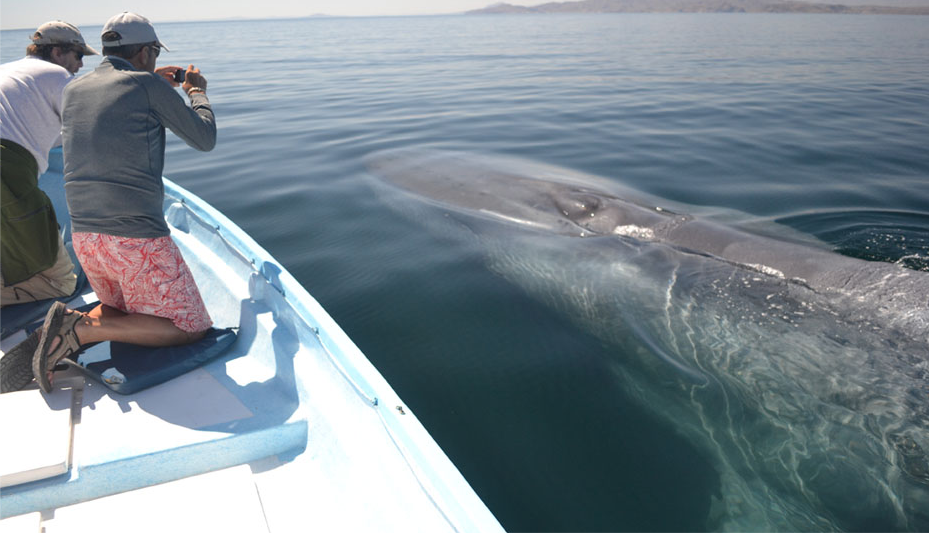
Passive Observation
Passive Observation seeks to coexist with whales without disturbing them.