
The conservation of the blue whale and the Loreto Bay ecosystem is possible thanks to the combination of scientific research, protected natural areas and responsible practices by the local community.
Loreto Bay National Park is a protected natural area that includes waters, islands and portions of the desert coast. Regulations are applied in this area to manage activities such as fishing, tourism and whale watching, with the aim of maintaining ecosystem health.
The Loreto community plays a central role in this conservation. Tour operators, fishers, guides, students and residents have adopted practices such as Passive Observation, responsible tourism and care for the marine and coastal environment. These actions not only protect whales, but also strengthen local identity and an economy based on well-managed nature tourism.
Among the main conservation challenges are:
- Climate change and its impact on Gulf productivity.
- Marine traffic and the risk of ship strikes with whales.
- Potential overexploitation of prey such as krill.
- The need to maintain a balance between tourism and conservation.
Community participation, together with long-term research and enforcement of regulations, is key to ensuring that Loreto Bay remains a refuge for the blue whale and for the biodiversity of the Gulf of California.
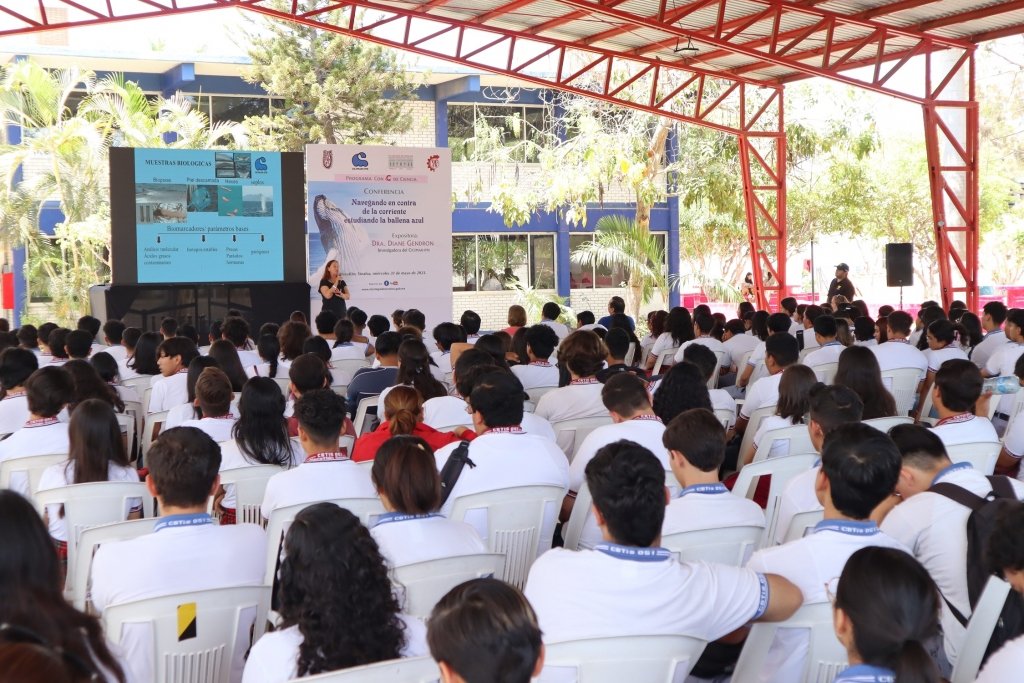
Conservation & Community
Conserving the blue whale means caring for its entire ecosystem.